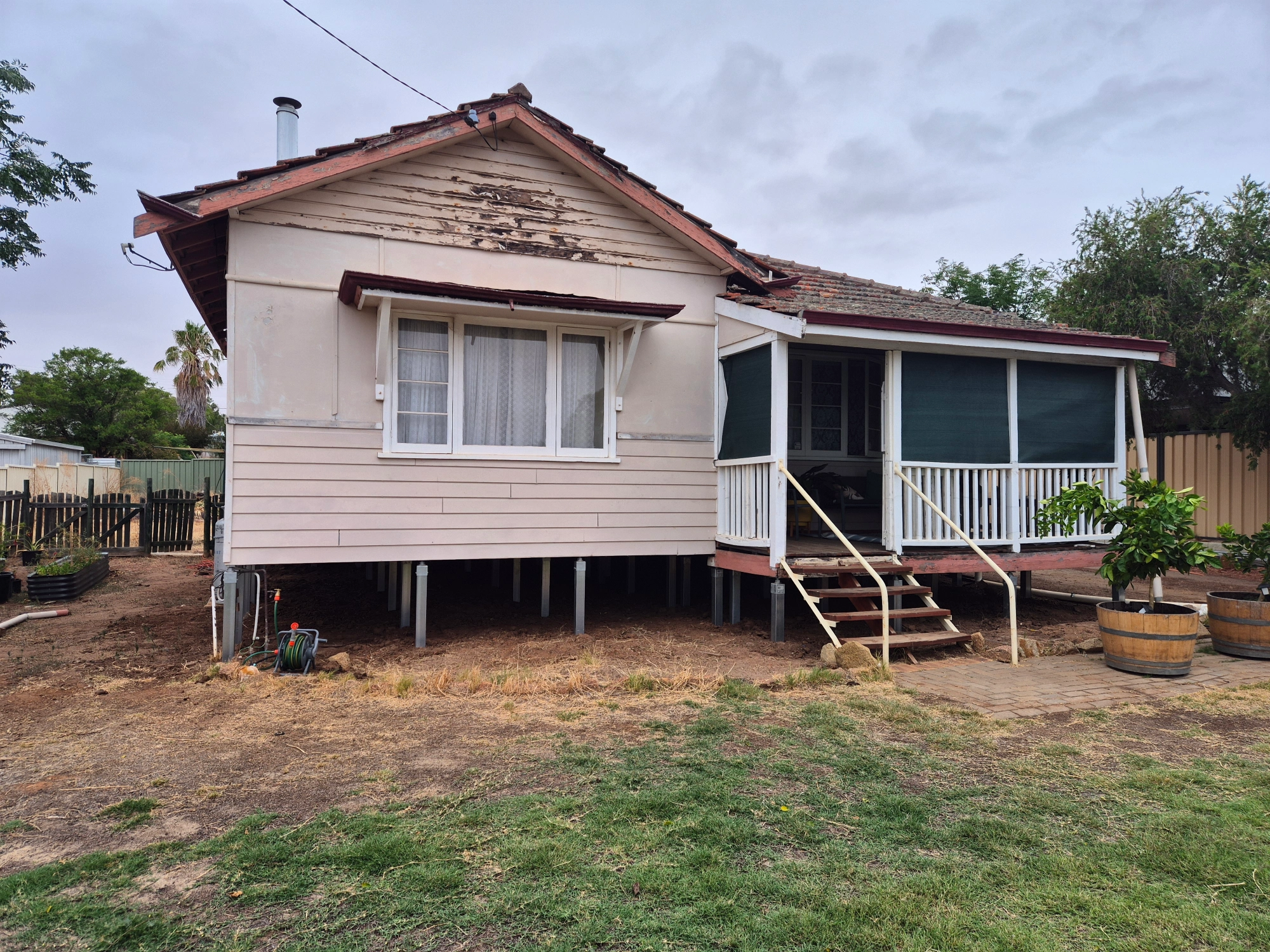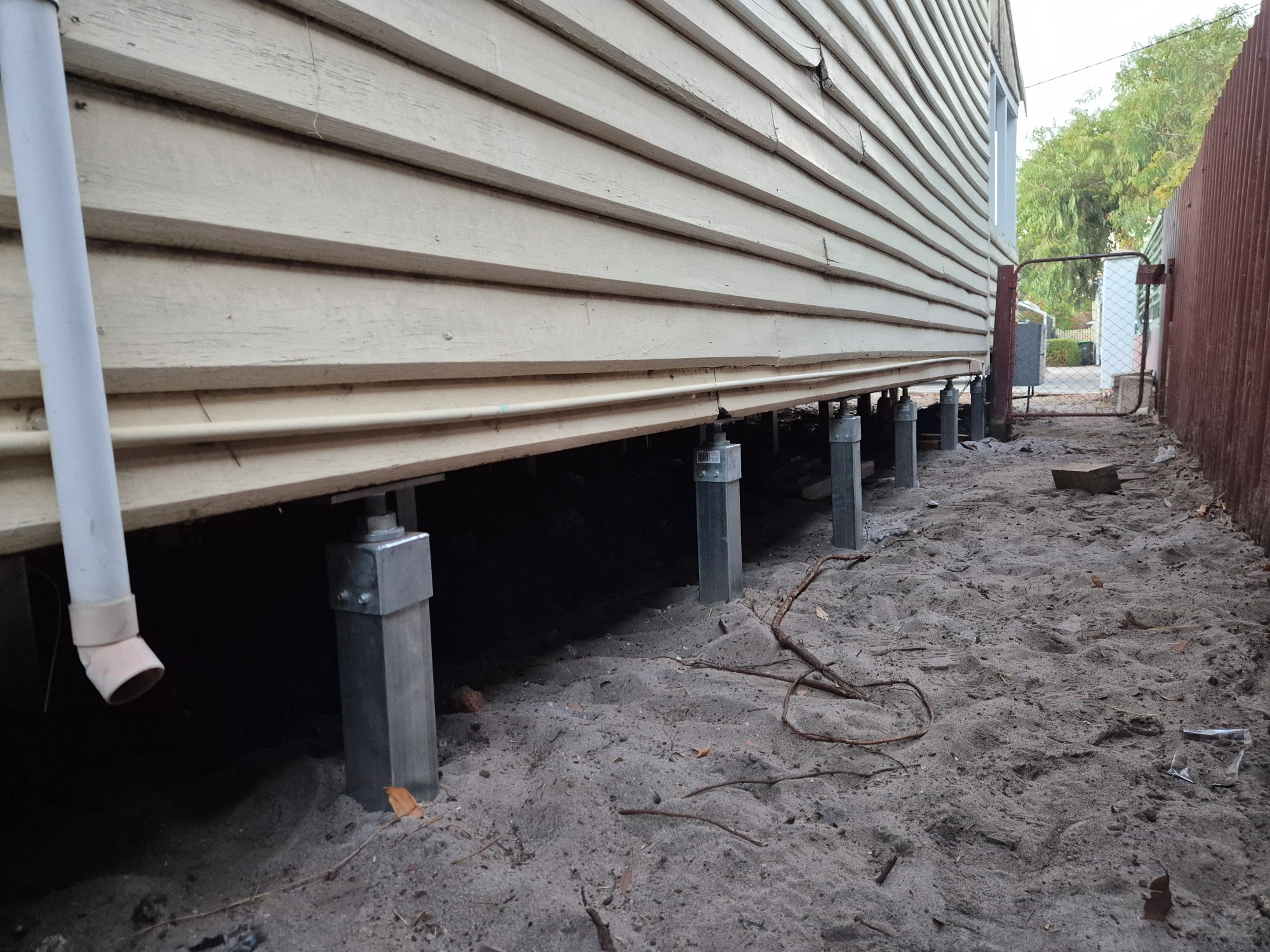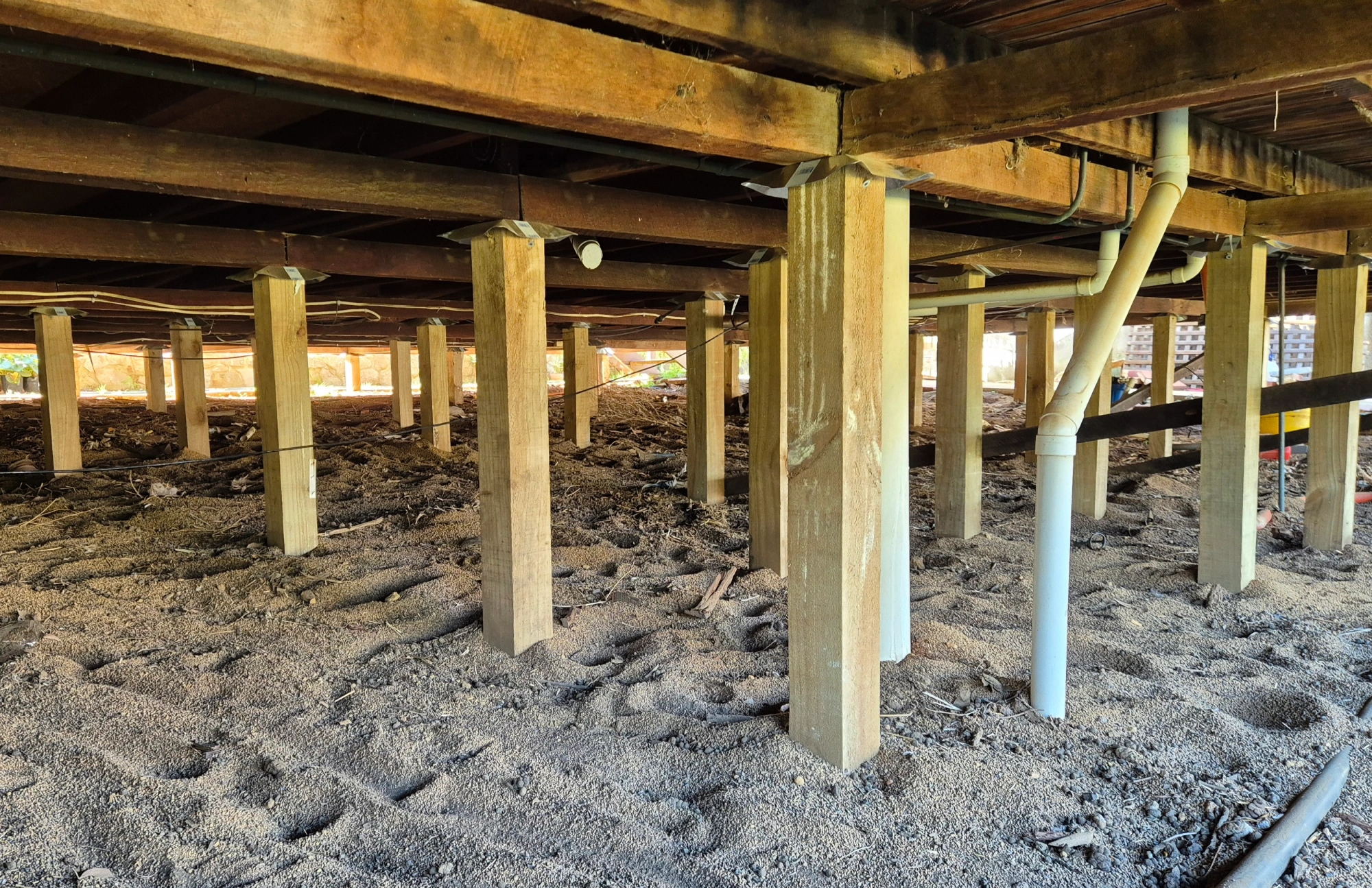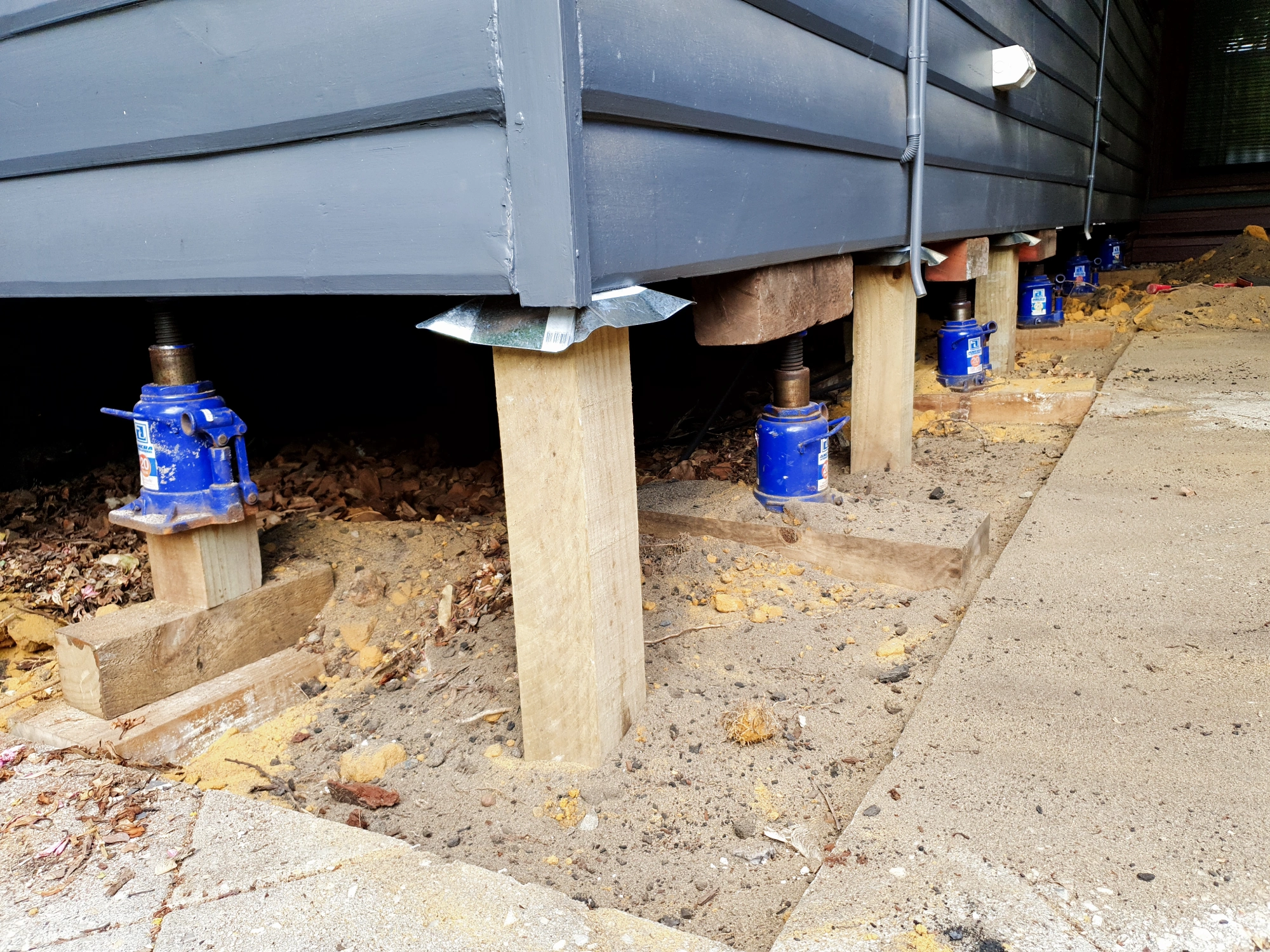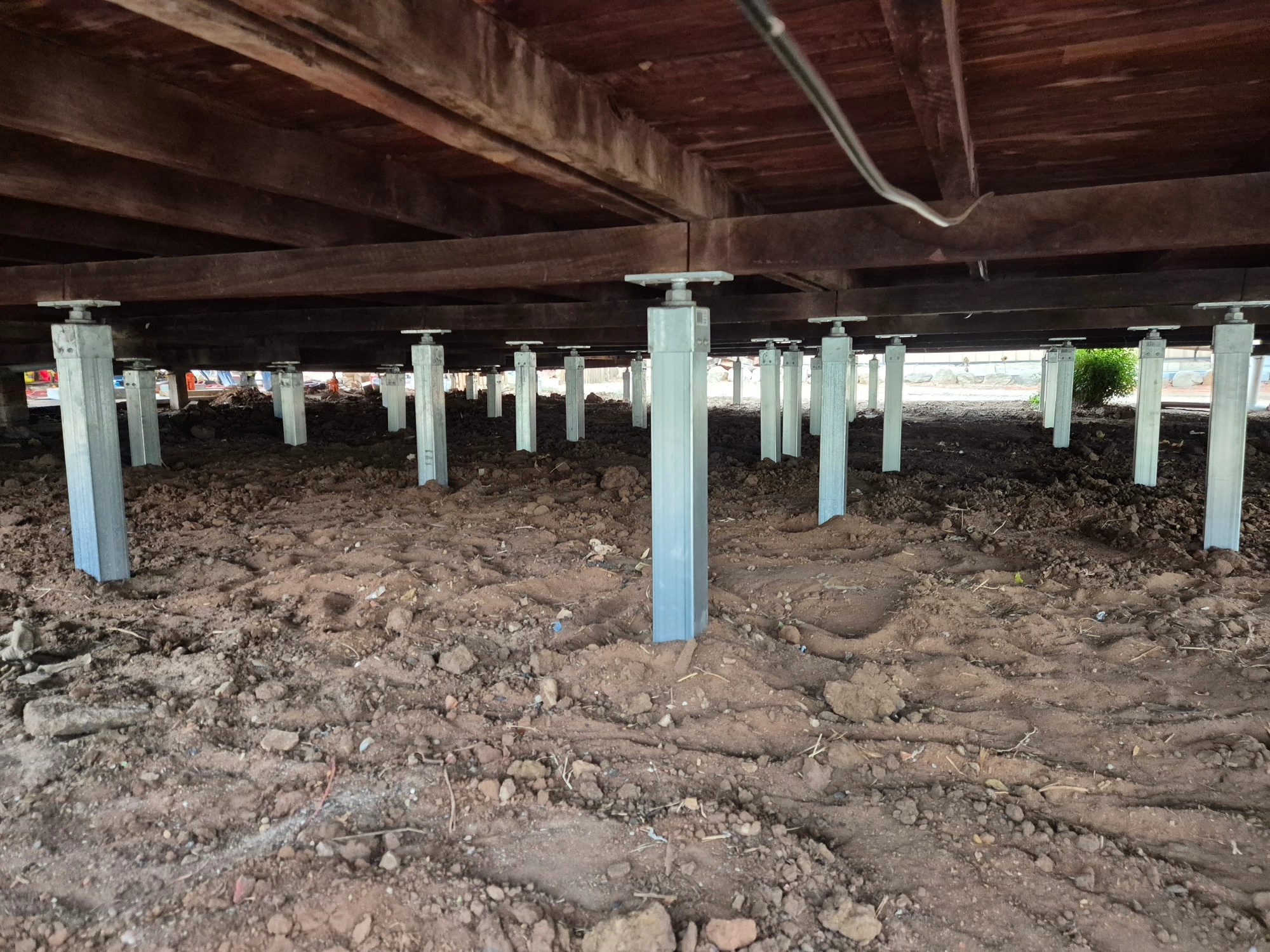
Step under almost any pre-1960s Perth home and you’ll find a familiar story. Solid red gum or jarrah once stood proudly as timber house stumps, carrying the weight of generations. But over time, those dependable blocks of timber often tell a different tale, soft to the touch, crumbling at the base, or leaning just enough to crack the walls above.
So why do timber house stumps rot, even when they look so tough? The short answer: moisture, fungi, and time don’t play fair. Let’s dig into the long answer, because knowing why your stumps fail is the first step towards protecting the home sitting above them.
The Nature of Timber in WA Conditions
Timber is organic. That means, unlike concrete or steel, it reacts directly to the environment. In Perth’s climate—dry summers followed by wet winters—timber house stumps are constantly pushed to their limits. When timber soaks up water from the ground or surrounding air, it becomes the perfect feeding ground for fungi.
And once fungi move in, structural decay begins. It doesn’t matter if you’re in leafy Fremantle, a regional town, or inner-city Perth; if your house sits on timber stumps, they’re exposed to nature’s wear and tear every day.
The Role of Moisture in Timber Stump Rot
The single biggest enemy of timber house stumps is moisture. Here’s why:
- Soil naturally holds water. When a stump is buried directly in the earth, the base stays damp year-round.
- Properties with poor drainage or blocked downpipes often see pooling water, which soaks the timber stumps until they weaken.
- Even plumbing leaks beneath a house on stumps can keep timber wet for months without being noticed.
The Types of Fungal Decay You’ll See
Not all rot looks the same. Homeowners with timber house stumps often see three main forms:
- Brown rot: Leaves timber crumbly, with cube-shaped cracks.
- White rot: Turns stumps stringy and pale, almost bleached.
- Soft rot: Thrives in constant wetness, making the surface spongy.
The Hidden Partner: Termites
Poor Ventilation and High Water Tables
Another overlooked reason timber house stumps rot is ventilation—or rather, the lack of it. Houses with cramped or sealed-off underfloors trap humidity, creating a fungal paradise.
In areas of WA with high water tables, the problem compounds. Even if you can’t see water, the soil may stay damp long after the rain stops. For a house on stumps, this means the bases never get a chance to fully dry.
Why Pre-1960s Homes Are at Risk
Homes built before modern building codes often used untreated hardwoods set directly into the ground. Back then, jarrah and other timbers were seen as nearly indestructible. But without protective treatments, even the strongest timber house stumps eventually give in.
Renovators and young families buying into these charming old homes are often surprised to learn that stump replacement is not optional—it’s essential. A solid renovation starts with a safe foundation.
How Australian Standards Shape Modern Repairs
The Real Cost of Ignoring Rot
Rotting timber house stumps don’t just affect the subfloor. They lead to sloping floors, cracked plaster, sticking doors, and even serious structural risks. Ignoring early signs only makes the repair more expensive later.
For investors and landlords, this can turn a rental property into a liability. For families, it’s about peace of mind. Either way, the foundation is not the place to cut corners.
If your property still relies on timber house stumps, don’t wait until sagging floors or termites make things worse. Moisture, poor drainage, and time guarantee decay sooner or later. The smarter choice is to act now.
Whether you’re exploring alternatives to timber stumps or planning a renovation for your house on stumps, Premier House Restumping can help. We specialise in safe replacements that meet Australian standards while protecting the character of your home.